Cat Litter Selection Guide -
How to Accurately Select the Right Cat Litter for Your Consumers and Fuel Business Growth ?
As the global pet economy continues to boom, cat litter—an indispensable product for cat owners—is witnessing rising penetration and growing demand for premium options across regional markets. For professionals in the pet industry like you, choosing the right cat litter isn’t just about boosting end-user repurchase rates and brand reputation; it’s a direct driver of business expansion. Scientific selection hinges on three core pillars – the key needs of your target consumers, product performance alignment, and regional compliance requirements. By integrating local market trends with high-quality product supply, you can achieve a win-win balance between exceptional end-user experiences and sustainable business growth. This guide breaks down the logic of cat litter selection from a professional perspective, paired with full-category adaptation strategies, to deliver actionable insights that help you scale your core business.
Effective selection must balance market suitability, alignment with consumer needs, and regional compliance. End-users in your market prioritize four critical cat litter attributes – clumping ability, odor control, dust levels, and safety. Your selection should start with these priorities, filtered through the lens of regional compliance standards.
- Core Performance Metrics – Align with Consumer Needs to Boost Repurchase
Clumping and moisture absorption are the cornerstones of cat litter functionality, directly impacting user convenience and long-term costs. High-quality cat litter should clump quickly on contact with moisture, form firm, non-crumbling clumps, and resist sticking to the litter box base—reducing cleaning frequency and litter waste for consumers. Low dust is equally non-negotiable – excessive dust can irritate cats’respiratory systems and add to household cleaning burdens.
Odor control is a top driver of repurchase. Some litters deliver long-lasting odor management through dual-action—material adsorption plus active decomposition—while others position themselves as “odor-free and low-irritant,” formulated with high-safety deodorants.
Safety is paramount – prioritize products free of harmful additives, non-toxic if ingested, and compliant with food-contact material standards in your customers’ regions.
- Scene Adaptability – Cater to Target Audiences to Expand Market Reach
When selecting cat litter, ask – What do your consumers value most? Do they prioritize functionally differentiated products with strong eco-friendly credentials and exquisite packaging? Or do they focus on cost-effectiveness and versatility?
Consumer preferences vary widely –
- Some seek “eco-friendly, biodegradable, and multi-functional hybrid litter” and are willing to pay a premium for sustainability;
- Others demand “safety, low irritation, and easy cleaning” with meticulous attention to product details;
- Many prioritize “cost-effectiveness and reliable basic performance.”
Your selection should be tailored to the regions you serve, while adhering to local environmental regulations, pet welfare standards, and other compliance requirements.
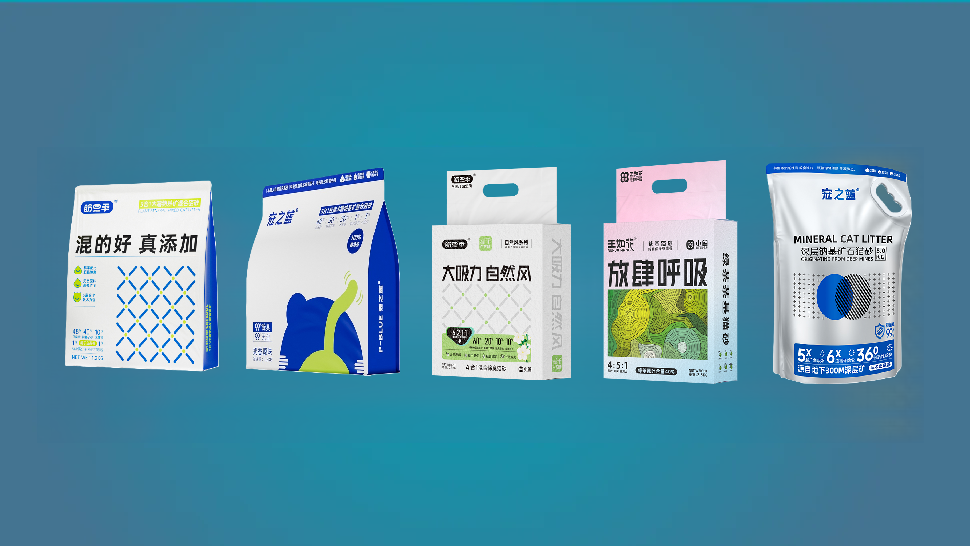
Today’s pet market features three primary cat litter categories—mineral-based, plant-based, and hybrid—each with sub-types that offer unique strengths and tradeoffs in performance, adaptability, and compliance. Combined with our core product portfolio, we can help you target your consumers’specific needs, achieve full-scene coverage, and gain a competitive edge.
(I) Mineral-Based Litter – High Cost-Effectiveness & Reliable Performance for Mass Markets
Mineral-based litter, crafted from natural or synthetic minerals, is a market staple thanks to its strong clumping ability, excellent moisture absorption, and affordable price point.
- Bentonite Cat Litter – The classic mineral-based option, made from natural bentonite. It forms tight clumps, absorbs moisture rapidly, and excels at odor adsorption—all at a low cost. Its versatility makes it ideal for ordinary cat-owning households with basic needs.
-
Crystal Cat Litter – Made from silica gel (silicon dioxide) in transparent or colored granules. It boasts exceptional moisture absorption, changes color (instead of clumping) when saturated (making replacement timing easy to gauge), and is dust-free and resistant to bacterial growth. Perfect for consumers sensitive to dust and focused on hygiene.
- Mineral Cat Litter – Formulated with sodium bentonite, refined through advanced screening and impurity removal. It retains bentonite’s core advantages while significantly reducing dust, improving clump stability, and minimizing sticking. Our mineral cat litter fits this category – it meets mass market demand for cost-effectiveness while elevating user experience through technical upgrades, adapting seamlessly to diverse use cases.
(II) Plant-Based Litter – Natural, Eco-Friendly & Low-Irritant—Ideal for Mid-to-High-End Trends
Plant-based litter, crafted from natural plant materials, is a fast-growing segment in the mid-to-high-end market, offering biodegradability, zero dust, and high safety.
- Tofu Cat Litter – Made from soybean fiber or okara (soybean pulp). Soft, dust-free, biodegradable, and easily flushable down toilets—ideal for urban apartment dwellers. Its non-toxic formula makes it safe for kittens, pregnant cats, and households concerned about accidental ingestion.
- Corn Cat Litter – Produced from corn starch via high-temperature compression. It’s naturally odorless, biodegradable, and low-irritant, with odor control relying on the material’s inherent adsorption. Perfect for consumers sensitive to chemical additives. While its clumping ability outperforms tofu litter, it’s highly sensitive to ambient humidity—moisture-proof packaging is recommended for humid regions.
- Wood Shavings Cat Litter – Made from wood processing by-products (e.g., pine or birch shavings) through high-temperature sterilization and compression. It naturally absorbs odors and moisture, is biodegradable, and has ultra-low dust. Ideal for odor-sensitive consumers—position it as a “practical + eco-friendly” solution.
- Paper Cat Litter – Crafted from recycled pulp, crushed and pressed into granules or strips. Soft, dust-free, highly absorbent, biodegradable, and safe—perfect for kittens, senior cats, cats with respiratory sensitivities, and “zero-harm” focused consumers (e.g., medical-grade pet channels, high-end households).
(III) Hybrid Cat Litter – Functional Integration + Full-Scene Adaptability to Drive Growth
Hybrid cat litter combines multiple materials in scientific ratios to complement strengths and offset weaknesses—making it the fastest-growing category in the pet market.
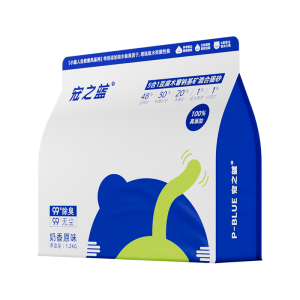
- 5-in-1 Hybrid Cat Litter – Formulated with 48% tofu litter, 30% sodium bentonite, 20% tapioca starch, 1% SAP (superabsorbent polymer), and 1% baking soda. SAP enhances water-locking capacity, and these five ingredients work in synergy to deliver five key benefits – strong clumping, long-lasting odor control, low dust, biodegradability, and high safety. Certified to European and American food-contact standards, it meets the rigorous demands of the mid-to-high-end market. If you aim to build a “premium functional” product image, this litter will help boost brand premium and profit margins.
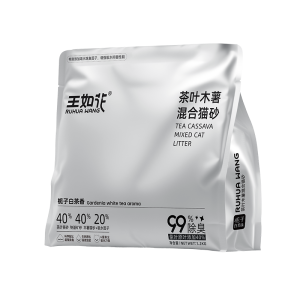
- Tea & Cassava Mixed Cat Litter – Key ingredients include tea extract, tapioca starch, pea fiber, corn starch, and natural sodium-based ore. Building on tea-based litter, tapioca starch enhances moisture absorption and clump stability while reinforcing eco-friendliness (tapioca starch biodegrades rapidly). It holds relevant overseas environmental certifications (e.g., EU OK Compost, US BPI Certification), precisely meeting consumers’dual demands for “sustainability + performance.”
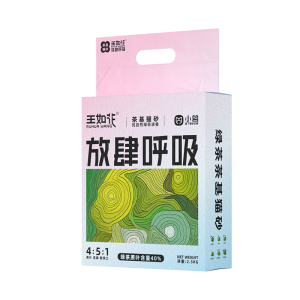
- Tea-Based Cat Litter – A mild blend of plant and mineral bases, combining tea extract, tofu, and bentonite. It leverages natural tea polyphenols for antibacterial and odor-eliminating effects (avoiding the irritation of chemical deodorants) while incorporating bentonite to improve clumping—solving the performance gaps of pure plant-based litter. Our tea-based litter is an innovative standout – it aligns with the global “natural and additive-free” trend while delivering practical performance through optimized formulas, helping you build differentiated competitiveness.
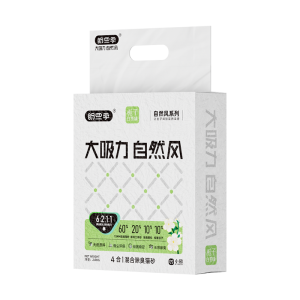
- 4-in-1 Hybrid Cat Litter – Contains 60% tofu litter, 20% bentonite, 10% natural odor-eliminating granules, and 10% food-grade antibacterial agents. It enhances “antibacterial + long-lasting odor control” beyond basic functions, ideal for households with strict hygiene standards. This product directly addresses the two biggest pain points—odor and bacteria—making it a perfect “niche scene bestseller” in your marketing.